
Monroe County's Multi-Day Arrest Reports
The Monroe County Sheriff's Office Current Arrests page gathers the newest bookings and older date selections together in one place. The interface has carried a newest date plus seven prior ones. That spans about a week of Monroe County arrest activity. That count is a published snapshot, though, not a standing promise of seven days. Delayed processing makes the older buckets valuable. An arrest on a Saturday can surface under a later booking date. And someone released quickly may drop off Current Inmates. They can still appear in a dated Monroe County arrest report.
Read the Monroe County Blotter
Start at the live timestamp. Work backward through the dates in order from there. The newest tab marks the current day's bucket, and the as of line shows when MCSO assembled its arrest data.
- Open MCSO Current Arrests and wait for Arrests by Date to load.
- Record the as of time before choosing an earlier date.
- Work from newest to oldest through every displayed bucket.
- Compare full name, age, charge wording, location, and any CAD, offense, or MNI reference.
- Open the official detail instead of relying on a card excerpt or headline.
- Use the Monroe County Clerk docket for court progress and outcome.
- Request records from MCSO when the date is no longer online.
For only the newest snapshot, the Arrested Today page explains same-day timing and confirmation.
Fields in MCSO Arrest Reports
Older Monroe County buckets share the same structure as the newest MCSO file. A card gives a summary, and the detail view can reveal more arrest fields. No single field appears on every entry.
| Entry field | How to read it |
|---|---|
| Name and age | Identity clues for separating similar names. |
| Arrest date and time | Event timing, distinct from the feed snapshot. |
| CAD or offense number | References useful in a records request. |
| Location and officer | Arrest details when supplied. |
| Charges | Descriptions and statute data as booked, not a disposition. |
| Bond and arraignment | Intake-era court navigation data that may change. |
| Photo | An official image when attached, or a generic star placeholder. |
Use addresses and birth dates only to separate same-name arrest records. A lookup should not become its own index of sensitive details.
Weekend Buckets Across the Keys
The interface covers every date across a weekend, with daily counts that rise and fall. One week proves no pattern. A holiday surge and a steady posting rhythm both stay possible. A thin bucket may just reflect timing or later intake work. If a weekend arrest is missing, check the next date before giving up. Compare MCSO Current Inmates when the person may still be held. The roster answers current custody. The dated blotter answers recent booking. For incident context, the Keys Weekly crime archive helps. It covers selected local stories.
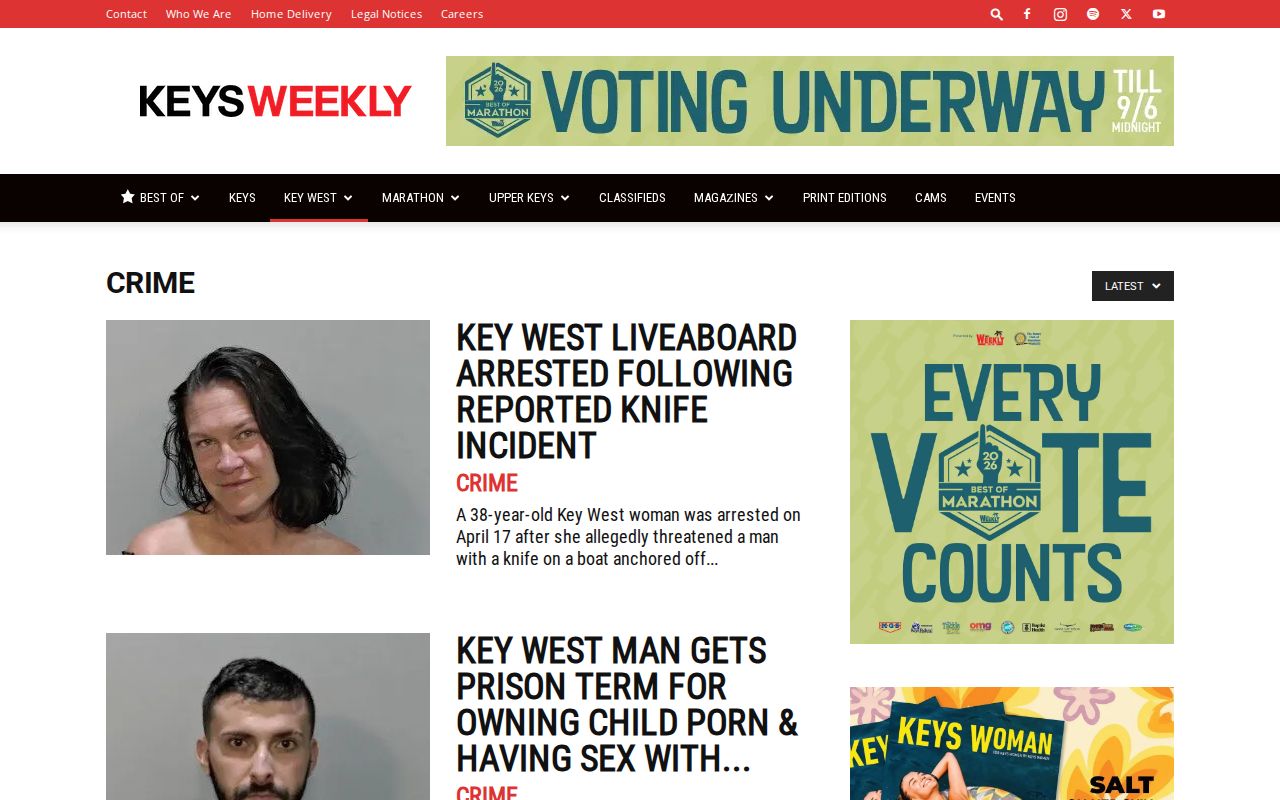
News stories never form a complete booking list, and old articles can linger after a case changes.
Monroe Arrest Archives After Roll-Off
MCSO makes no retention promise for Current Arrests. When a date rolls off, file through the MCSO JustFOIA portal. Give the name, a rough date range, and any booking, MNI, CAD, or offense number. Request the booking record, photograph if kept, affidavit, or release record you need. Florida's General Records Schedule GS2 sets benchmarks. Item 16 covers booking records, item 22 covers commitment and release lists, each held one anniversary year after release, and item 51 covers headcount records for a fiscal year. Holds or longer agency retention can extend those terms. The MCSO arrest-data response feeds the separate daily files.
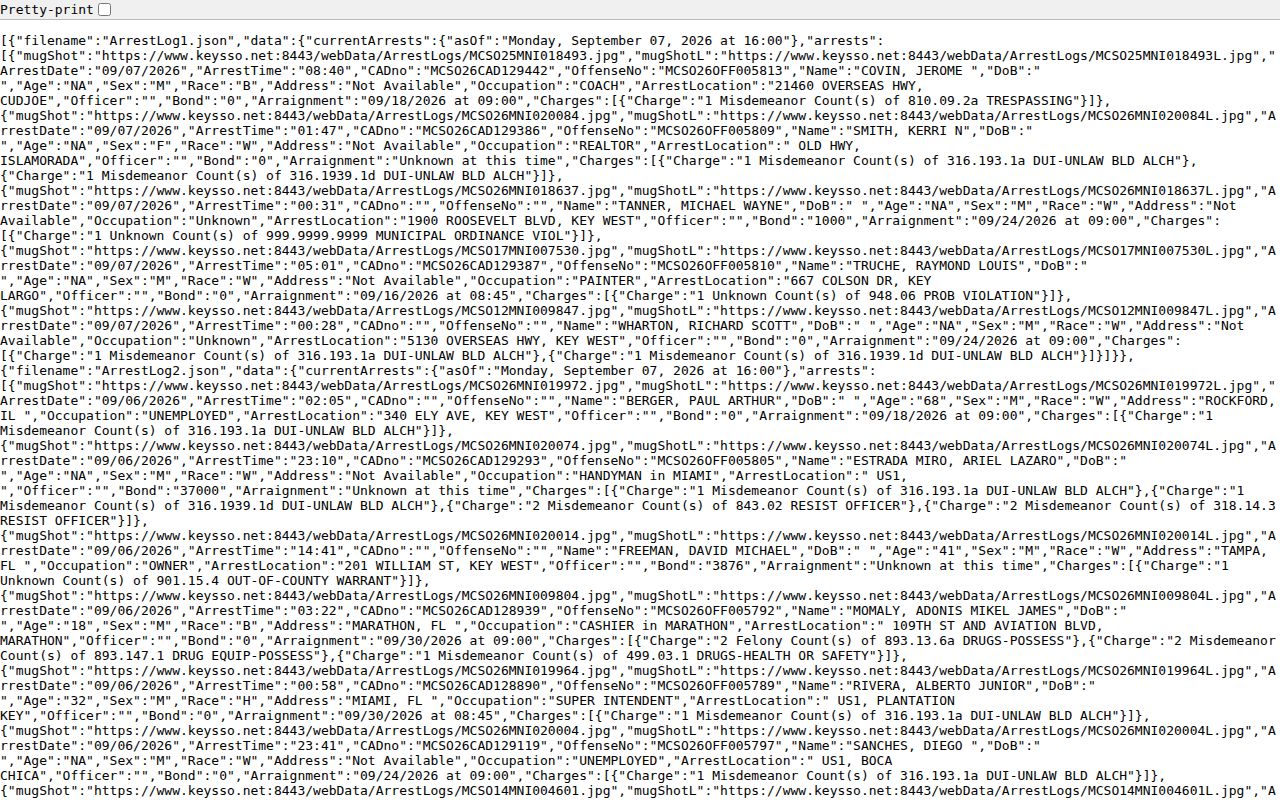
The data response shows the current window. It is not a pledge that the same bucket count stays online. When the question is what a court decided, there is one right route. The Monroe County Clerk criminal search answers it. Its docket records reach back to about 1990. Document images run from roughly 2007, with access varying by age, case type, and confidentiality.
Note: A report may roll off the website while its official custodian still maintains the underlying public record.
News Is Not an Arrest Log
Keys Weekly and FL Keys News Crime run selected arrest, crime, and court stories. Their coverage stretches from Key West to Islamorada. A story can add context a booking card lacks. Publication follows news judgment, not a schedule. MCSO's Weekly Rap Up and Key West Police releases are official but selective as well. Start with the Sheriff feed for Monroe County arrests. Lean on news for context and the Clerk for court records. Unofficial pages can sit stale and never prove current custody.
Service Calls and Arrest Reports
MCSO also posts 7-Day Service Call Logs, but a call is not an arrest. A log entry shows deputy response activity. Plenty of calls end without anyone booked. A dated arrest report, though, ties a person and charges to a booking record. Keep the labels straight: call logs describe responses. Current Arrests describes bookings, and Clerk dockets describe court proceedings. Blending them turns an incident into a claim the records never made.
Arrest Allegation to Court Outcome
A charge listed by MCSO is recorded at intake. Prosecutors and courts can amend, reduce, dismiss, or resolve it later. Bond and arraignment fields help locate a case. They say nothing about how it ends.
Match the record to where the person actually is. Someone released from the Monroe County jail can still sit in an old date bucket long after the live roster drops the name. State prison time means the Florida Department of Corrections search is the right tool. Federal custody calls for a federal locator instead. Custody stage first, source second.
An arrest also creates more paperwork than people expect. Key West Police may write the incident report for a city arrest, yet MCSO holds the booking entry once detention intake begins. In Marathon and Islamorada, city guidance sends law-enforcement records straight to MCSO. So one event can leave the officer field, the booking card, and the court case split across different offices.
Older files respond to precise asks. Name a narrow date range and any reference number you hold. Request an electronic copy when the office offers one. If an exemption or fee estimate applies, have the custodian flag it up front, so a simple booking question never balloons into a sweeping search.